If you’ve ever taught a phonics lesson and thought, They’ve got it! only to see the same students miss the pattern in their writing ten minutes later, you are definitely not alone.
A student might read cat, map, and tap beautifully during a short vowel lesson, then turn around and spell ship as shep or cake as cak when writing independently.
It can feel frustrating because they did learn the sound. They did practise the words. They may even have completed the phonics worksheet correctly.
So why does it fall apart when they need to spell on their own?
Often, it’s not because students haven’t been taught the phonics skill. It’s because they need more practice applying it through encoding, word sorting, and meaningful spelling routines.
Reading a Word and Spelling a Word Are Not the Same Thing
In phonics lessons, students often get lots of practice reading words. They blend sounds, read decodable words, and recognise spelling patterns in text.
That is important.
But spelling asks students to work in the opposite direction. Instead of looking at letters and saying the sounds, they need to hear the sounds in a word, choose the correct spelling pattern, and write it down.
That is a much bigger job.
For example, when reading the word cat, students see the letters c-a-t and blend the sounds together.
When spelling cat, they need to:
- Say the word clearly.
- Segment the sounds /c/ /a/ /t/.
- Match each sound to a letter.
- Write the letters in the correct order.
- Check that the word looks right.
This is why encoding practice is so important. Students need regular opportunities to move from hearing sounds to writing words, not just reading words that are already printed for them.
Why Word Sorting Helps Students Become Better Spellers
Word sorting is more than cutting and gluing words into columns.
When students sort words, they have to think carefully about how words are built. They look for patterns, compare sounds, and notice what is the same and different between words.
For example, if students are sorting cat, hat, map, tap, can, man, they are not just reading a list of CVC words. They are thinking about word families, short vowel sounds, and spelling patterns.
They start to notice things like:
- cat and hat both end in -at
- map and tap both end in -ap
- can and man both end in -an
- all of the words have the short a sound
That noticing matters.
It helps students build spelling knowledge that they can use again later when they are writing independently.
A Simple Routine for CVC Spelling Practice
One of the easiest ways to make spelling practice more meaningful is to follow a simple routine that moves students from recognising words to applying them.
Here’s a routine that works well for CVC words, short vowels, long vowels, vowel teams, and other phonics patterns.
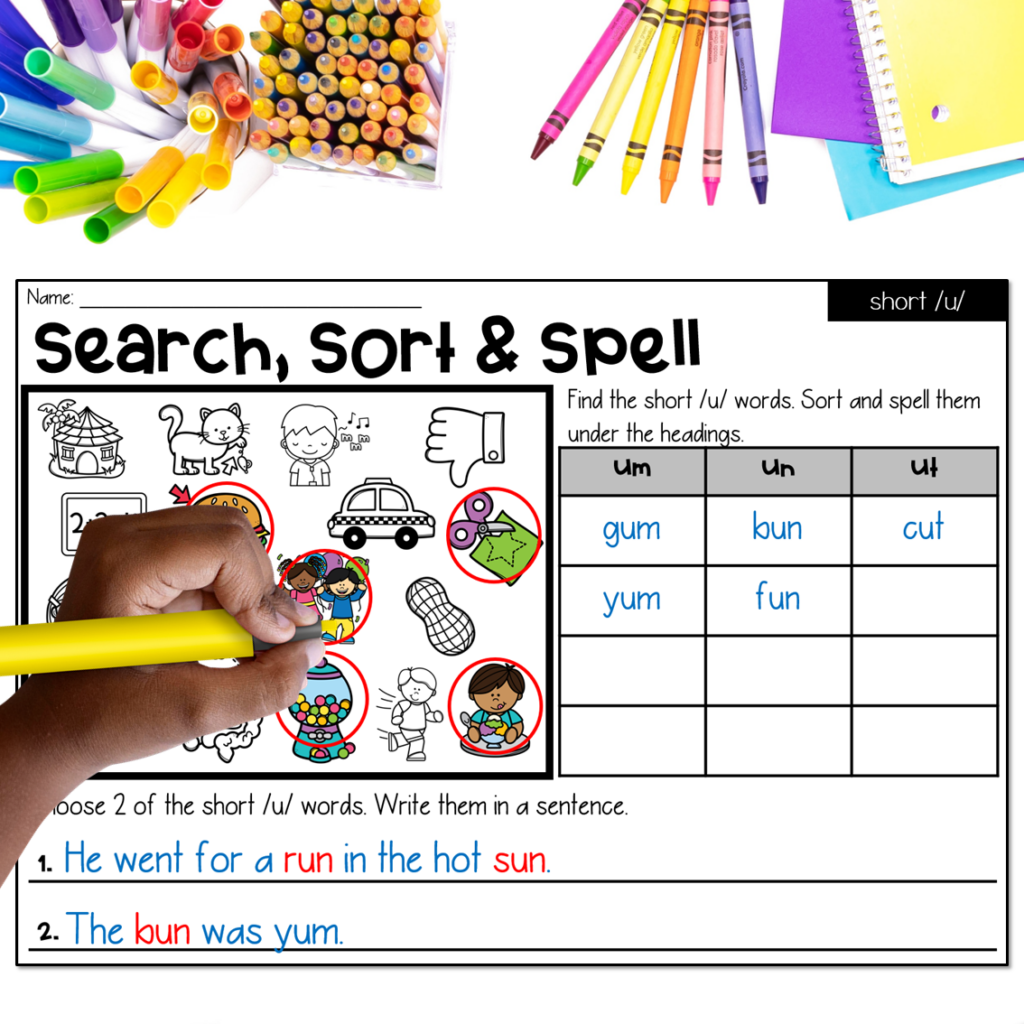
1. Search
Students say and look for words that match a focus sound or spelling pattern.
For example, they might search for words with the short a sound or words that belong to long i word families. Students need to say and listen to the words to hear the sounds.
This gives students a clear focus. They are not just completing a worksheet — they are looking closely at how words work.
2. Sort
Next, students sort the words into groups.
This is where the thinking really happens. Students need to decide where each word belongs. For example, does ‘tune’ belong under ‘u_e’, ‘oo’ or ‘ew’?
Students need to think about which of the spellings look right.
3. Spell
After deciding where the word belongs, students write the word.
This gives them the encoding practice they need. They are not just reading the words or matching pictures. They are writing the spelling patterns themselves.
4. Use the Words in Sentences
The final step is application.
Students choose some of the sorted words and use them in sentences. This helps bridge the gap between phonics lessons and independent writing.
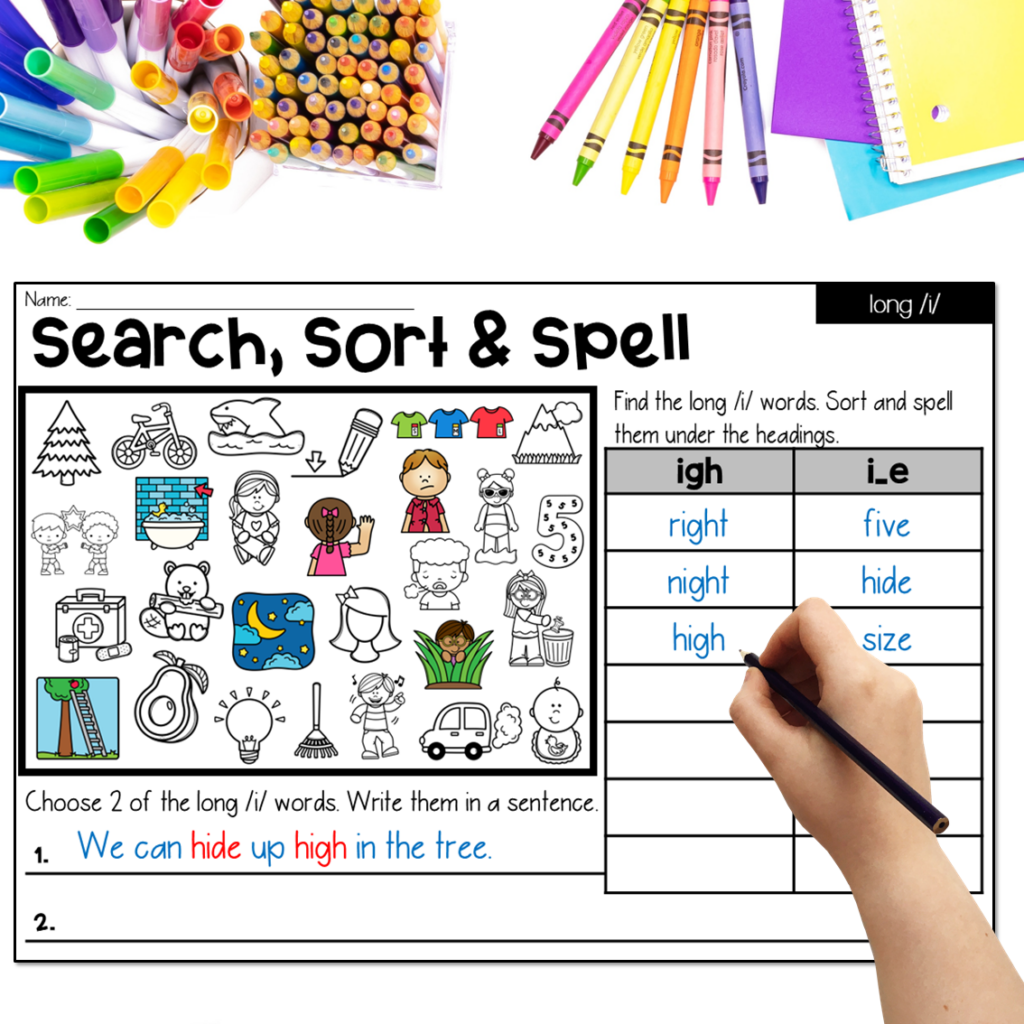
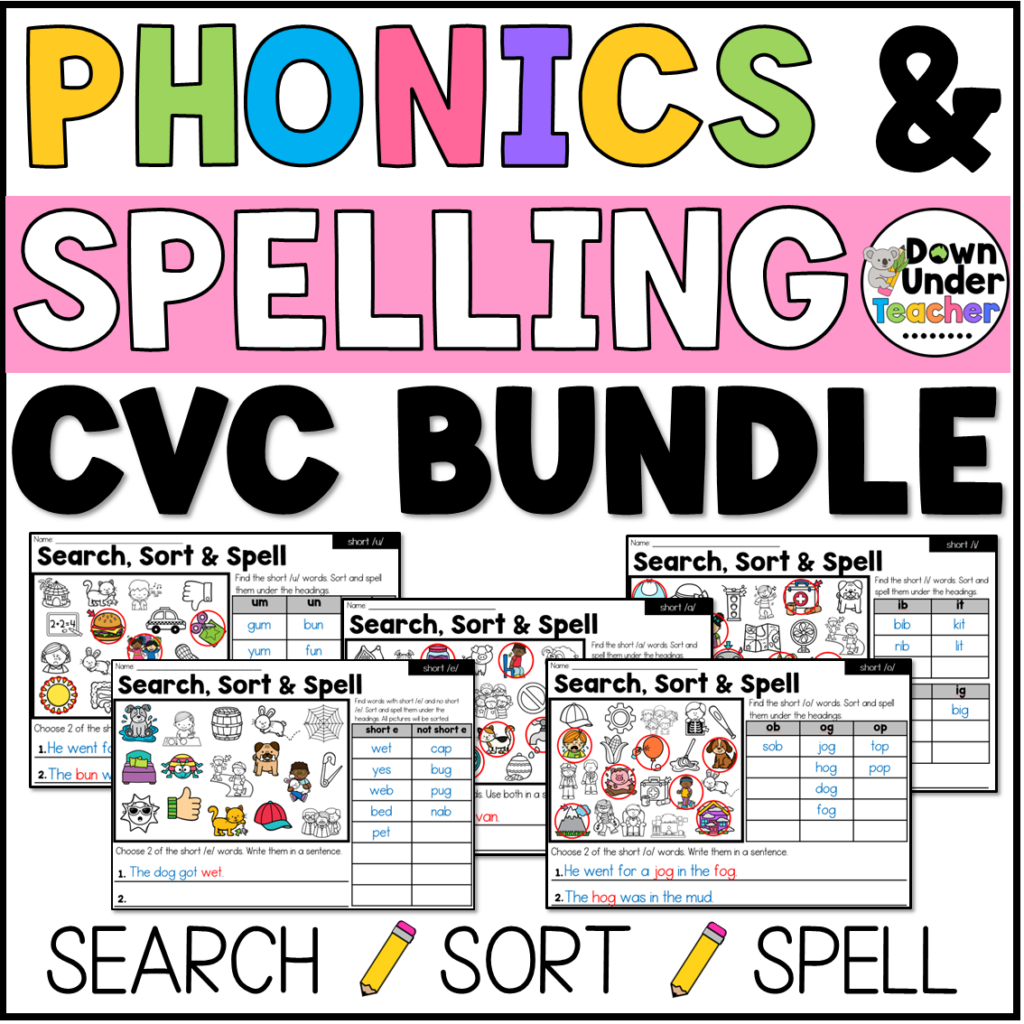
Search, Sort, Spell Phonics Resource
Word sorts are easy to fit into your weekly phonics routine because they are flexible. You can use them with the whole class, in small groups, or as independent practice.
I have Short and Long Vowel packs available in my TPT store if you want to check them out.