
Teaching young students to solve addition and subtrction word problems can be tricky. That’s because solving word problems requires more than simply knowing addition and subtraction facts. Students have to understand what is happening in the story, decide what information is important, represent the problem and then choose a strategy to solve it.
For kindergarten and first grade studens, that takes a lot of modelling and practice.
Here are some simple ways to help your students become more confident addition and subrction problem solvers.
1. Start by Acting Out Word Problems
When first introducing word problems, it is important to provide opportunities for students to see what is happening in the problem.
Use counters, cubes, toy animals, pictures and even the students themselves, to act out the problem.
Ask questions like:
- What did we know at the beginning?
- What changed?
- Did our group get bigger or smaller?
- What are we trying to find out?
At this stage, the goal is not math fact fluency. It’s helping students understand that a word problem tells a mathematical story.
This is also where I come back to for students who can calculate correctly, but have difficulty deciding whether a situation involves addition or subtraction.
2. Organize the Problem with a Ten Frame
Once students understand how to act out the story, a ten frame can help them ortanize the quantities in a more structured way.
Instead of working with loose counters, students place teh counters on a ten frame. This helps them begin to see numbers in relation to 5 and 10, rather then relying only on counting one object at a time.
The ten frame acts a a bridge between concrete manipultives and more abstract strategies because students are still touching and moving objects, but the structure helps them notice number relationships at the same time.
3. Move to a Number Path or Number Line
As students become more confident with concrete models, you can begin introducing a number path or number line.
This is where all the work we’ve been doing on learning to understand the problem comes in – are we adding and our total is getting bigger, or are we moving backwards and our total is getting smaller? We need to teach our students to connect the movement to what happened in the story.
Rather than teaching number lines as a separate strategy, use them alongside ten frames and concrete materials to show how we can represent the same maths in different ways.
4. Connect the Word Problem to an Equation
Eventually, our students are ready to record the situation with numbers and symbols. This is the most abstract of our strategies and should only be introduced after students are already confident showing and talking about word problems in different ways. In other words, this is where all our previous modelling pays off!
Students look at their ten frame, manipulatives, pictures, and/or number lines and connect those representations to the equation. From here, they can also move their equations to part-part-whole models and number bonds.
To check that students truly understand, I like to ask them to look at their equation and tell me what each part represents in the problem.
For example, for the problem “There were 12 squishies in the tub. Michael took out 7 to play with. How many squishies are still in the tub?’, they should be able to say that the 12 in their equation is how many squishies were in the tub to start, 7 is the amount that Michael took out, and 5 is how many squishies are still in the tub. You’d be amazed at how tricky kids find this to explain at the start! But like all things, practice and repetition make it easier.
Where to from here?
Once our students have a good understanding of joining and separating problems, it’s important to develop flexible problem solvers by varying the location of the unknown – after all, real mathematical thinking doesn’t always end with the mystery at the end! Introducing students to change unknown, start unknown and comparative problems is very important to develop their thinking as mathematicians.
You may have to go back to Step 1 – Acting Out as you introduce each problem type and provide lots of repeated opportunites for practice.
Make Word Problem Strategies Easier to Model
One of the problems with teaching word problems is having all of these representations ready to model during your math lesson.
If you want students to use manipultaives, ten frames, number lines, number bonds and equations, it helps when you cna quickly show those strategies side by side and talk through the connections between them.
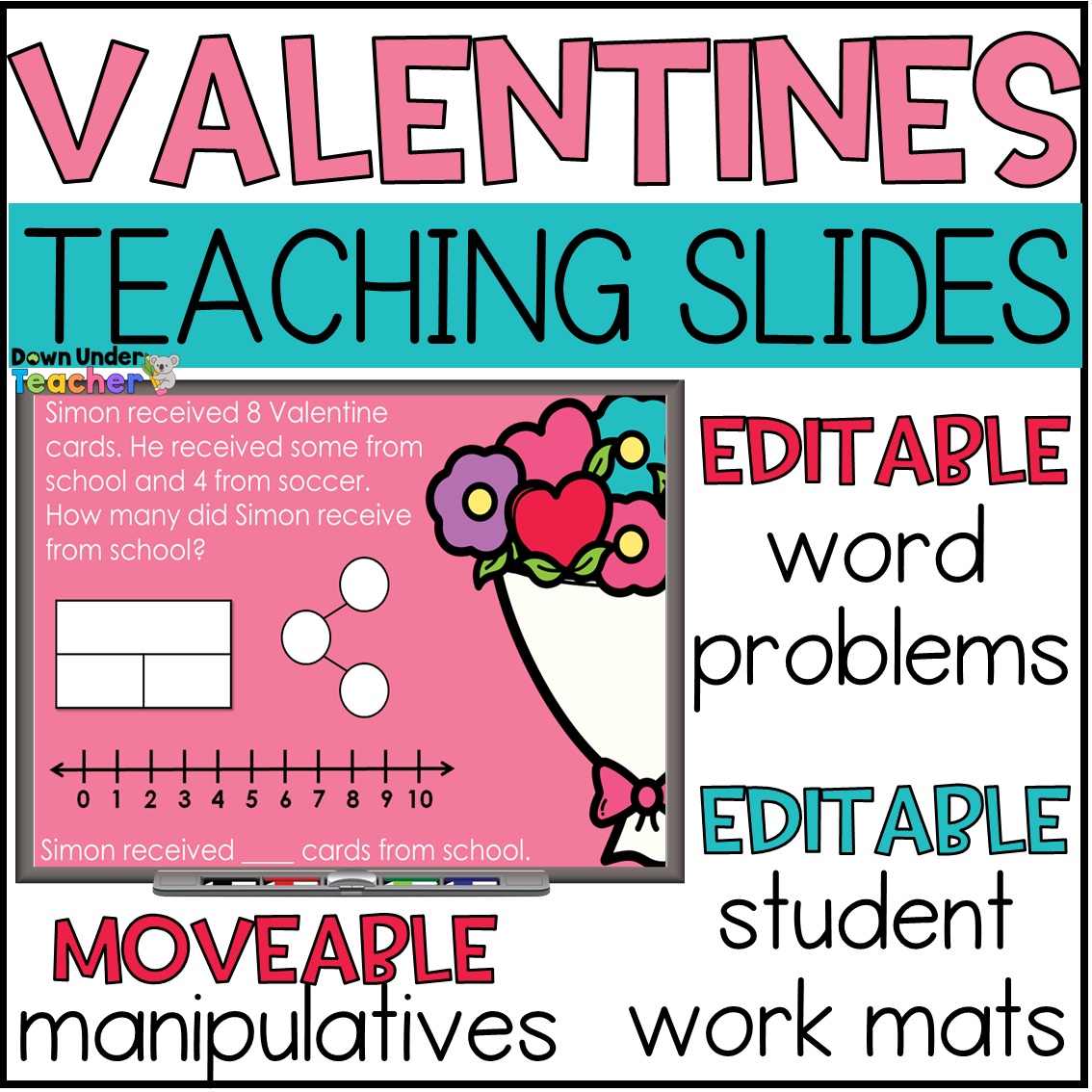
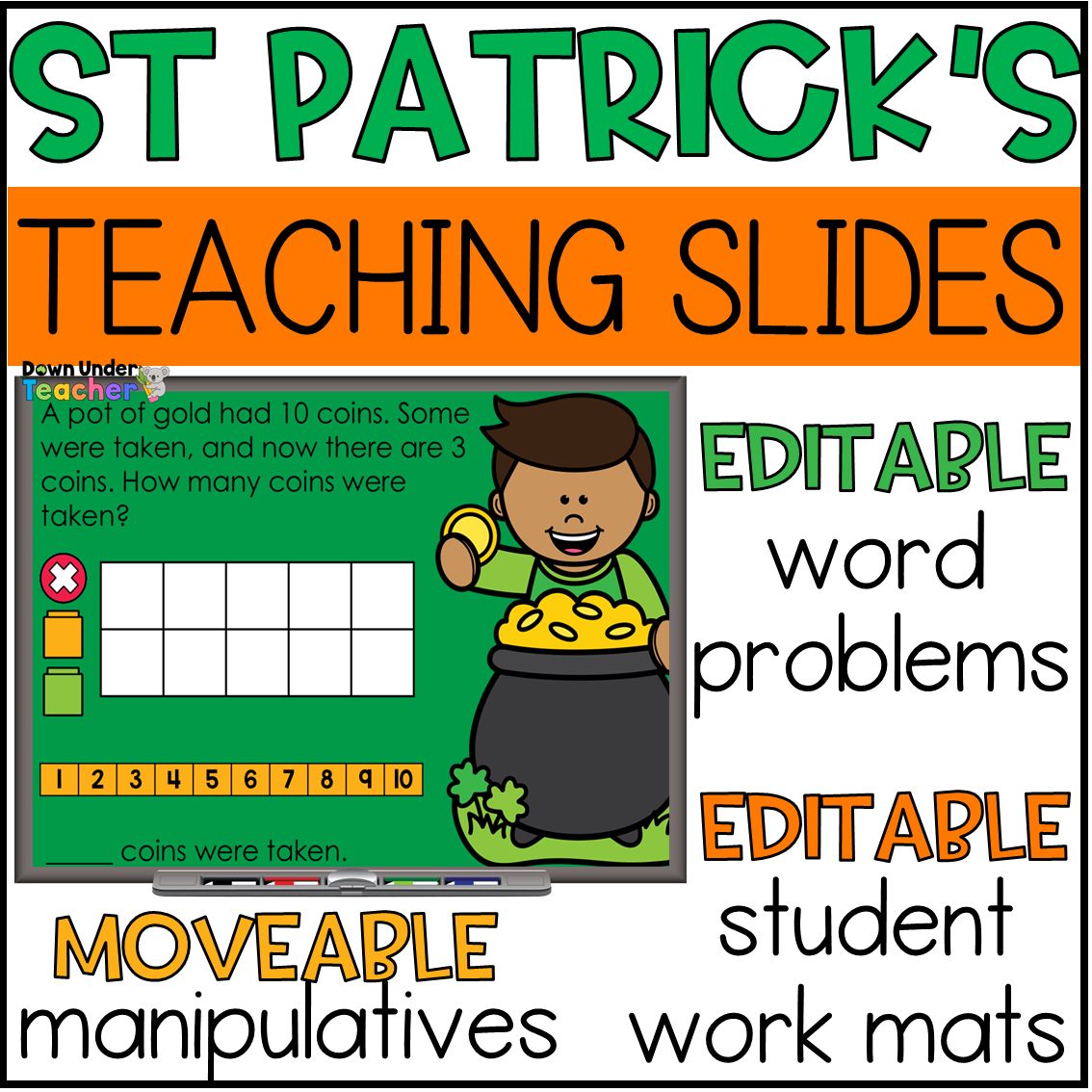
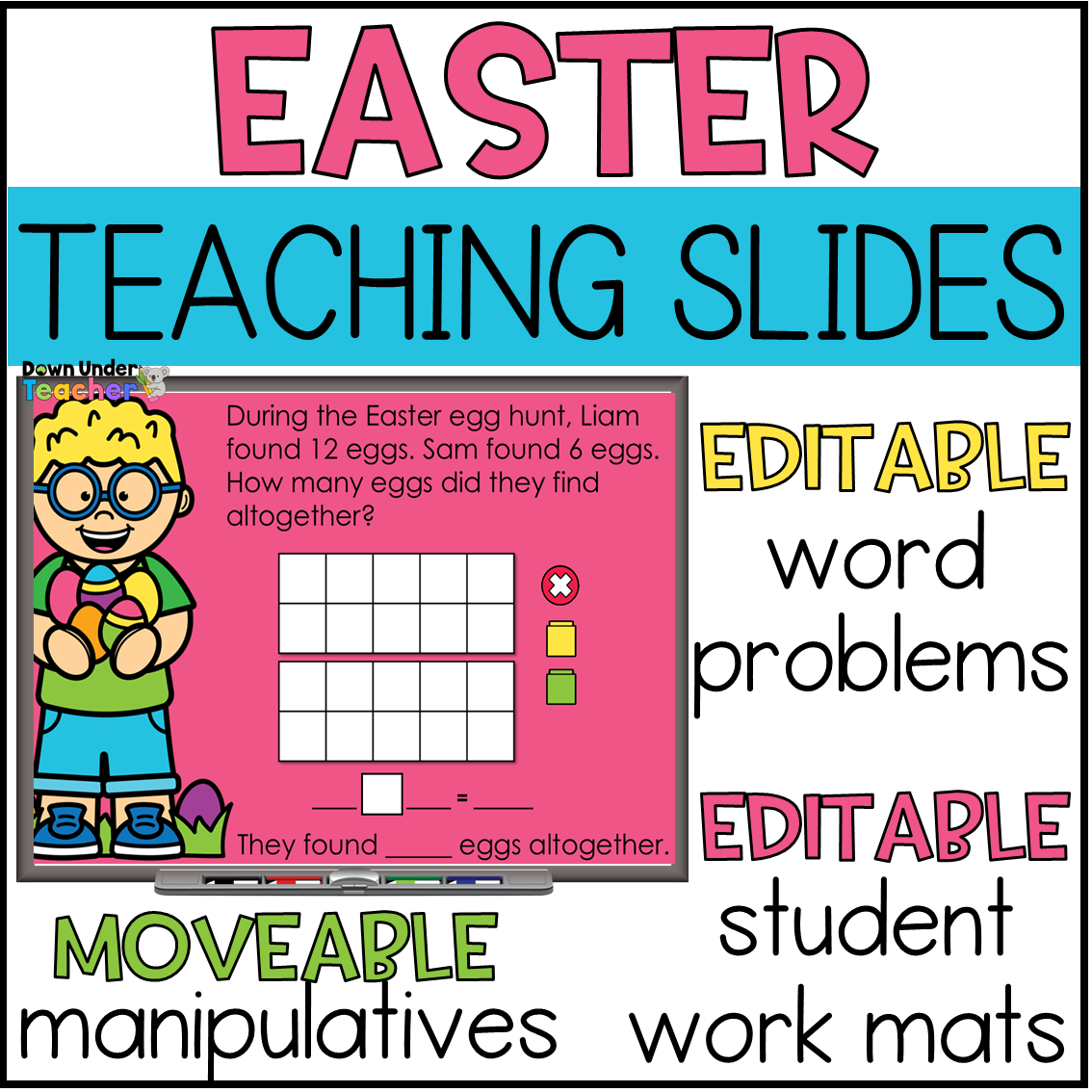
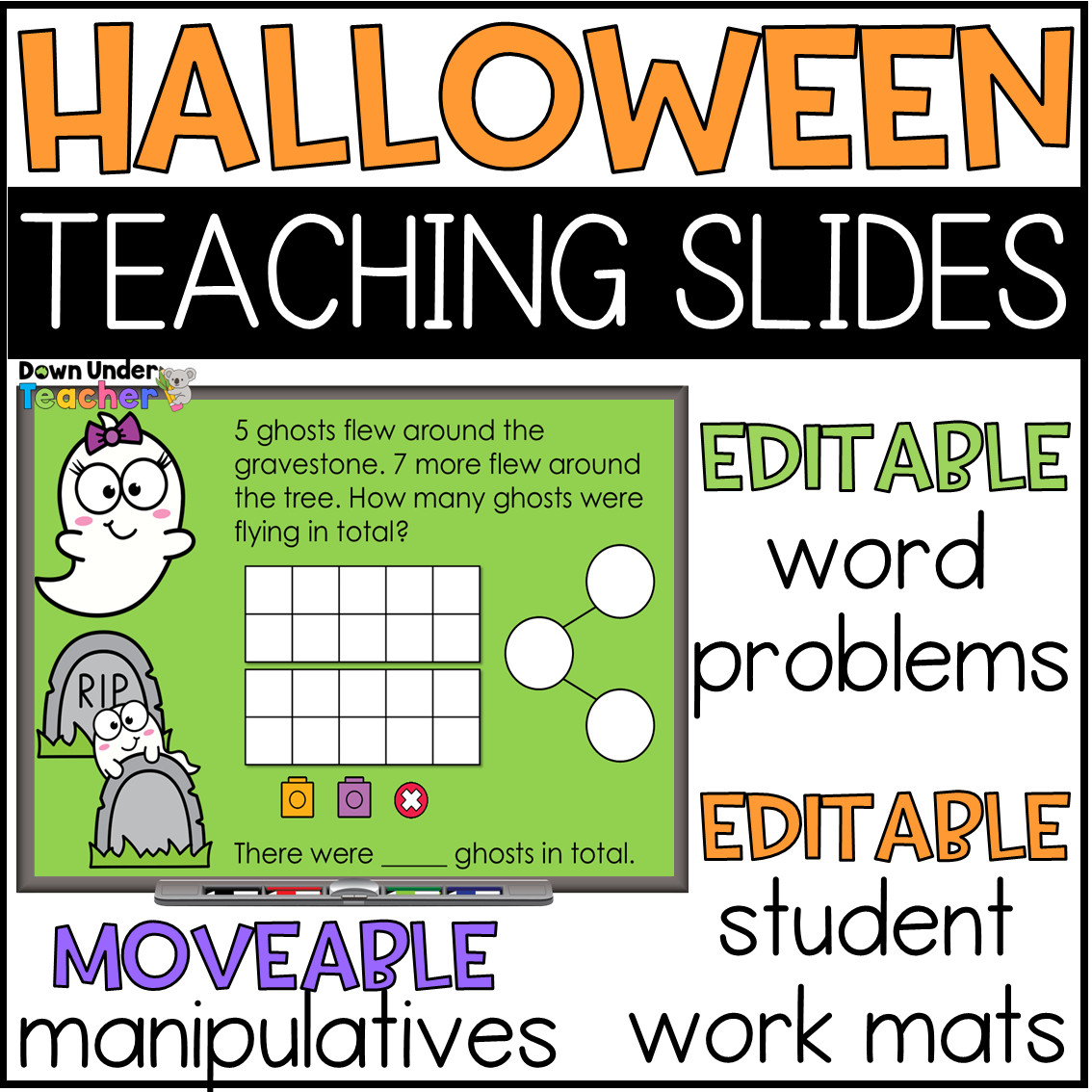
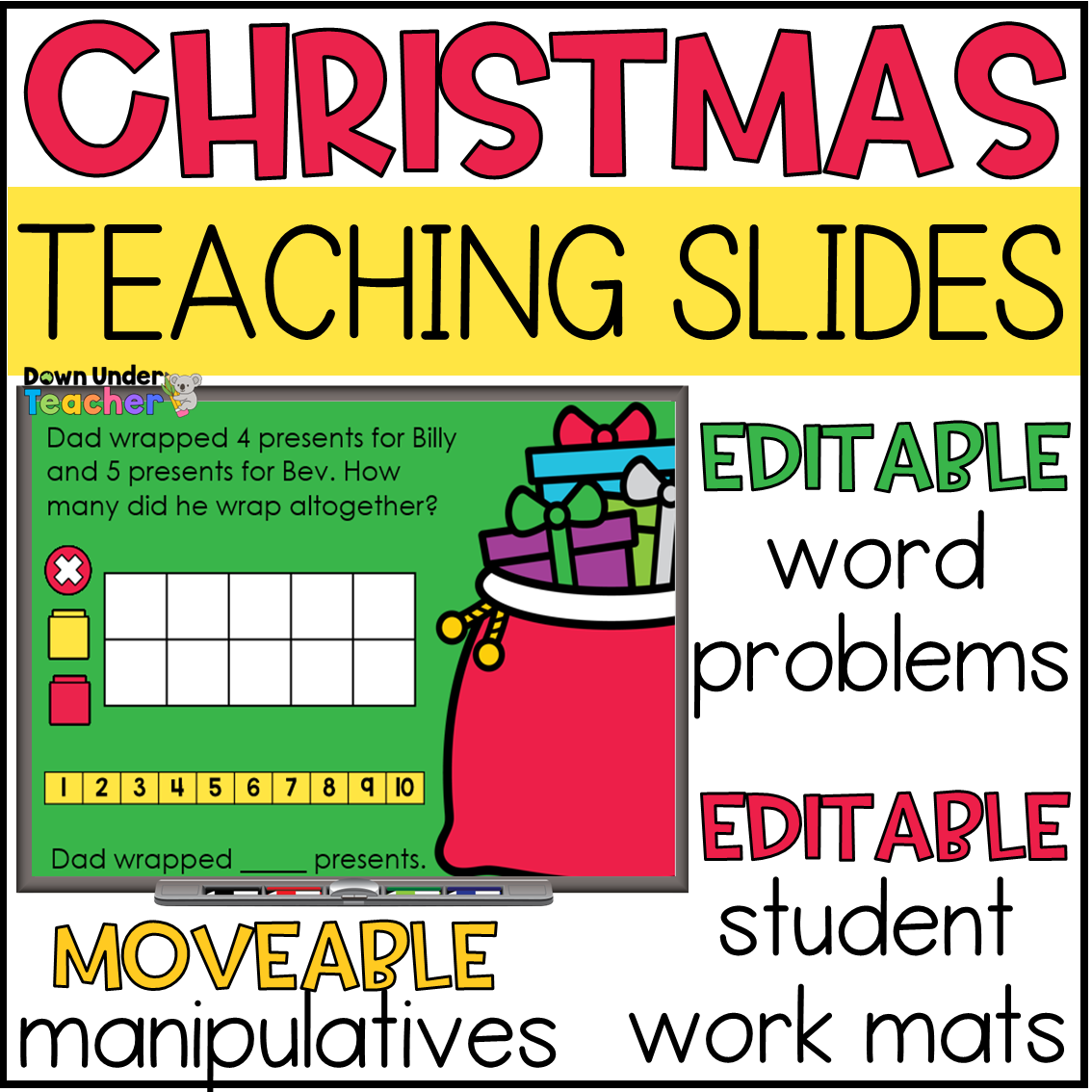
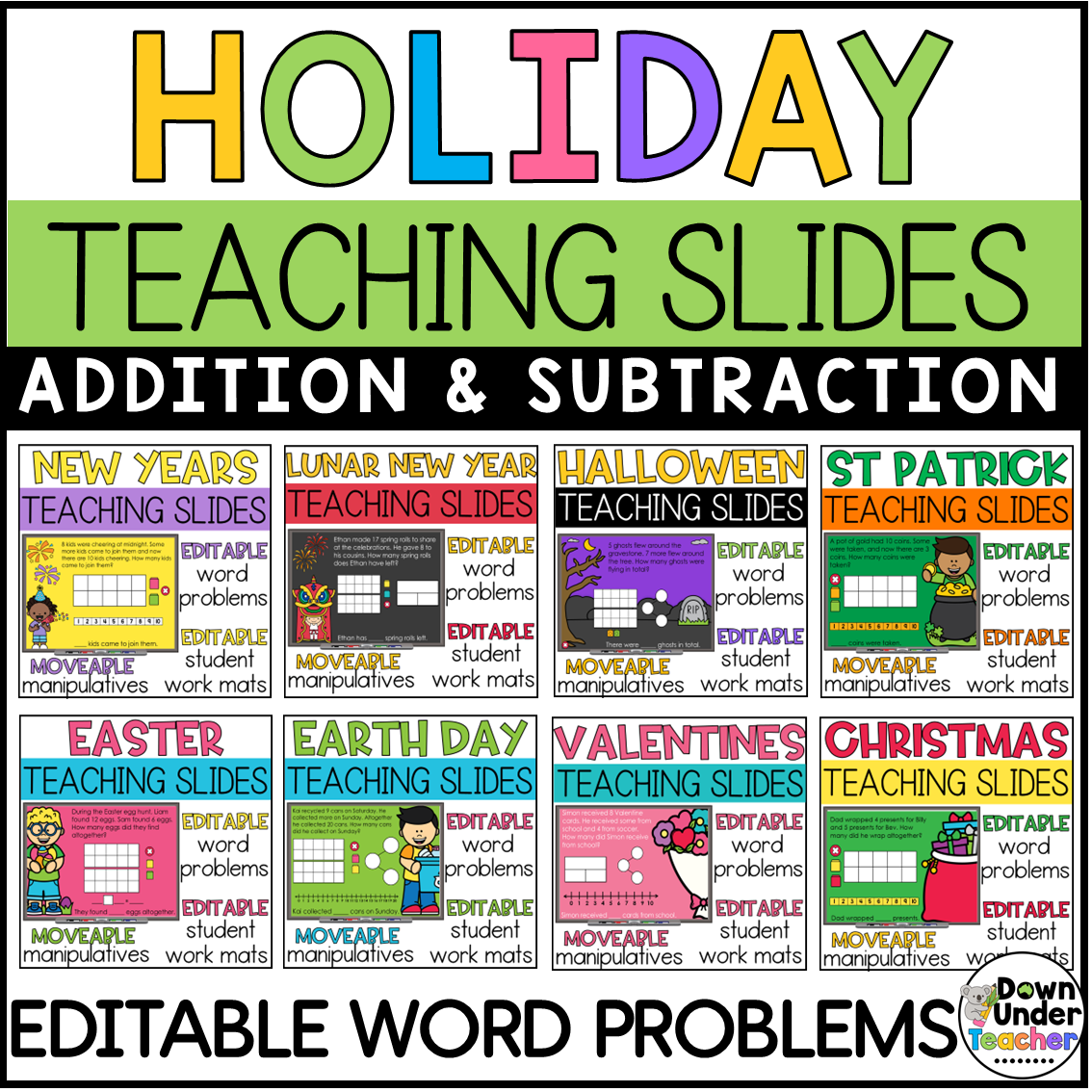
That’s exactly why I created my Addition and Subtraction Within 10 and 20 Word Problem Lesson Slides.
The editable PowerPoint slides are designed for whole-group instruction and give you ready-to-use word problems along with movable math tools you can use to model different solving strategies.
Depending on the problem and your students’ needs, you can model with:
- linking cubes and ten frames
- number lines or number paths
- part-part-whole models
- number bonds
- number sentences
Because the tools are editable, you can choose the repesentation that best matches the strategy you are teaching and students can follow along using the editable Math Mats.
You can also change the numbers, names, or problem type, which makes it easier to revisit the same strategy as your students’ understanding grows.
Move from Modelling to Independent Practice
After your students have had plenty of opportunities to solve word problems with you, the next step is giving them chances to apply those same strategies more independently.
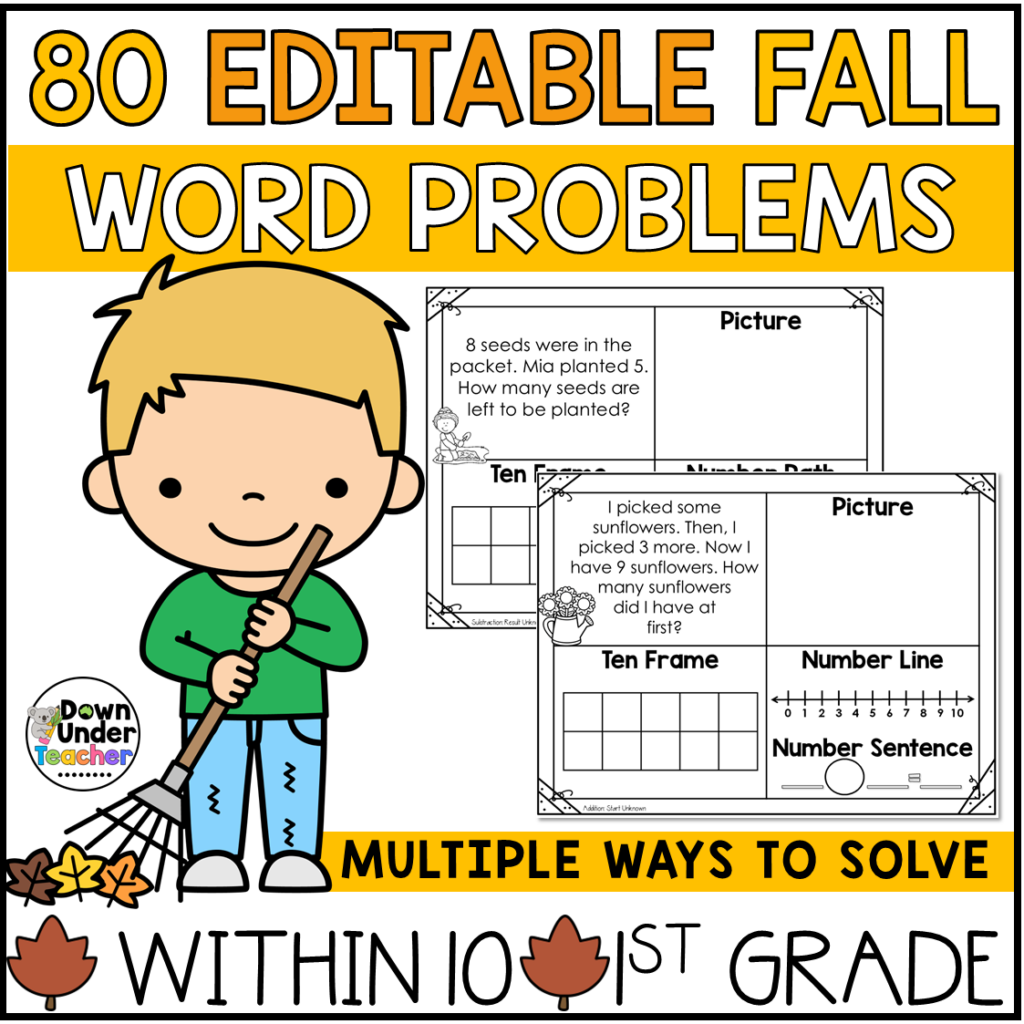
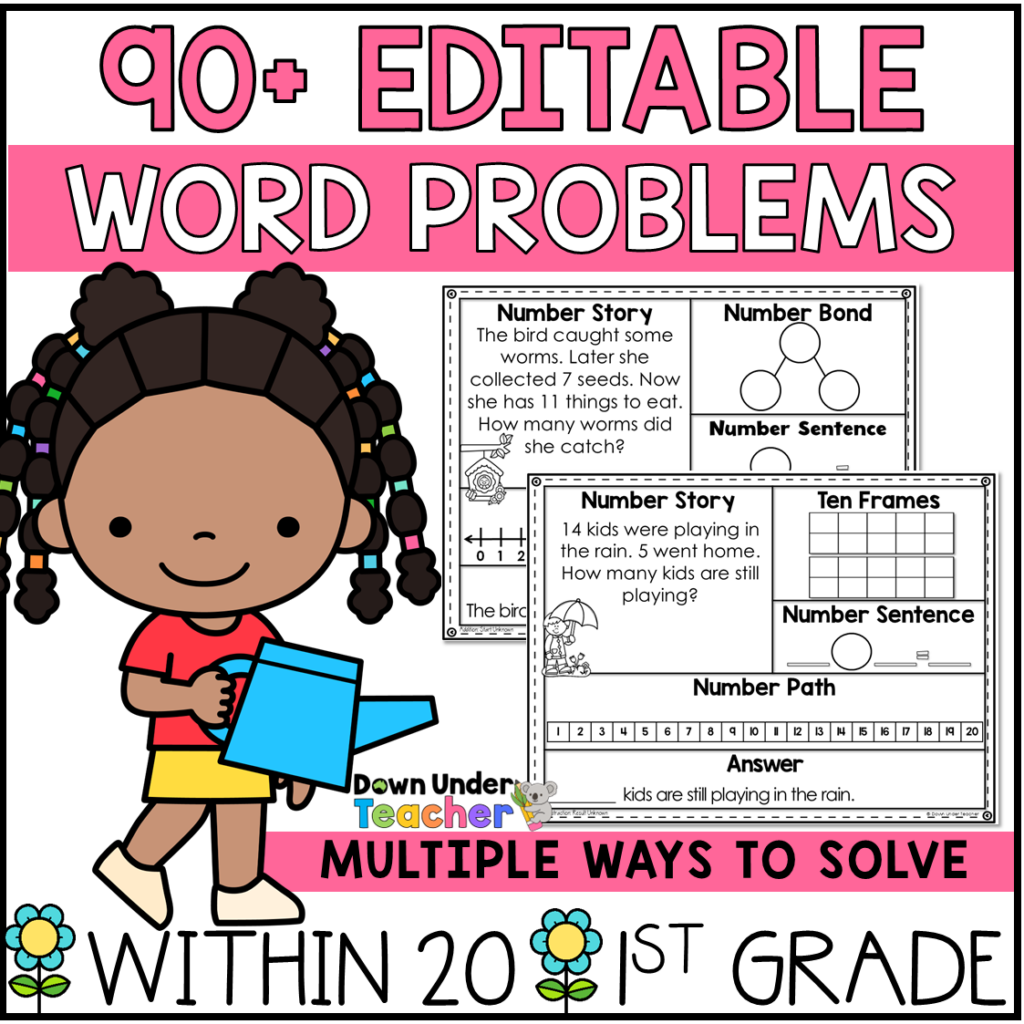
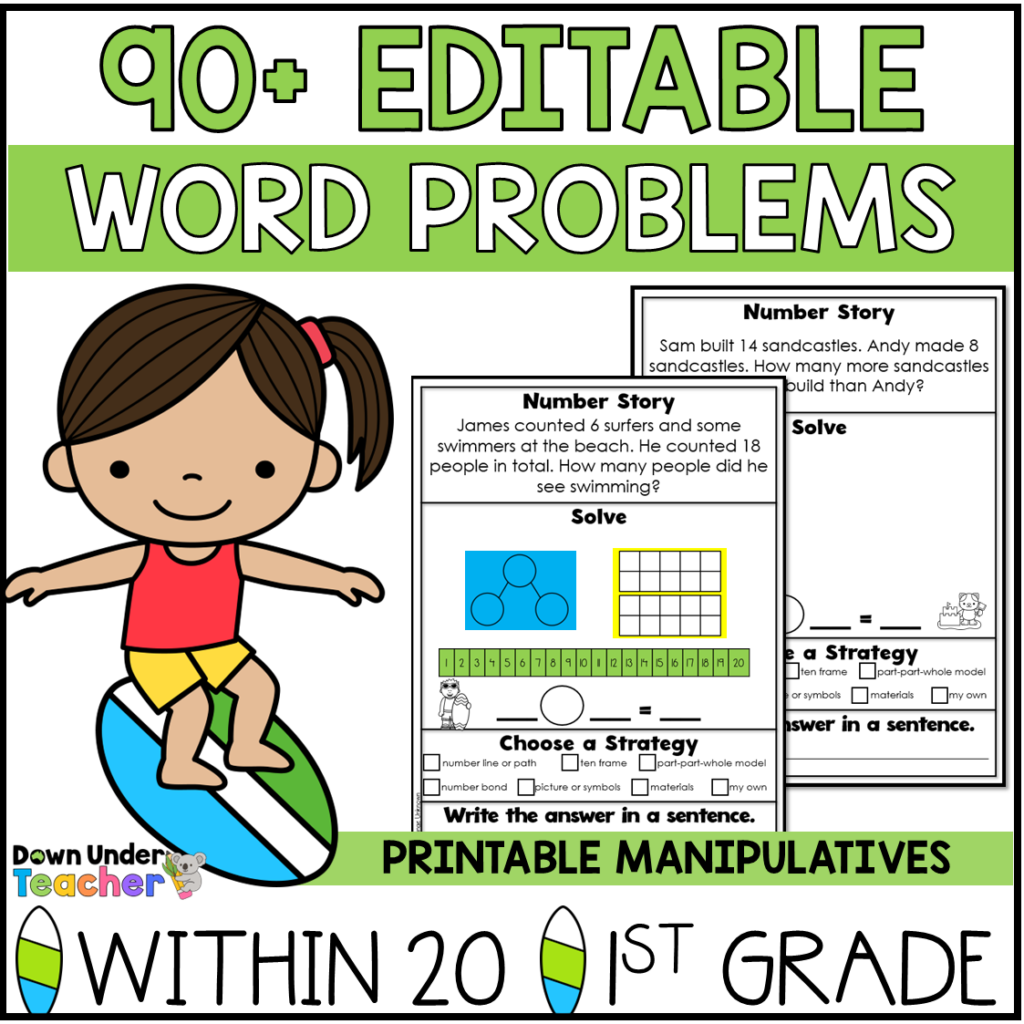
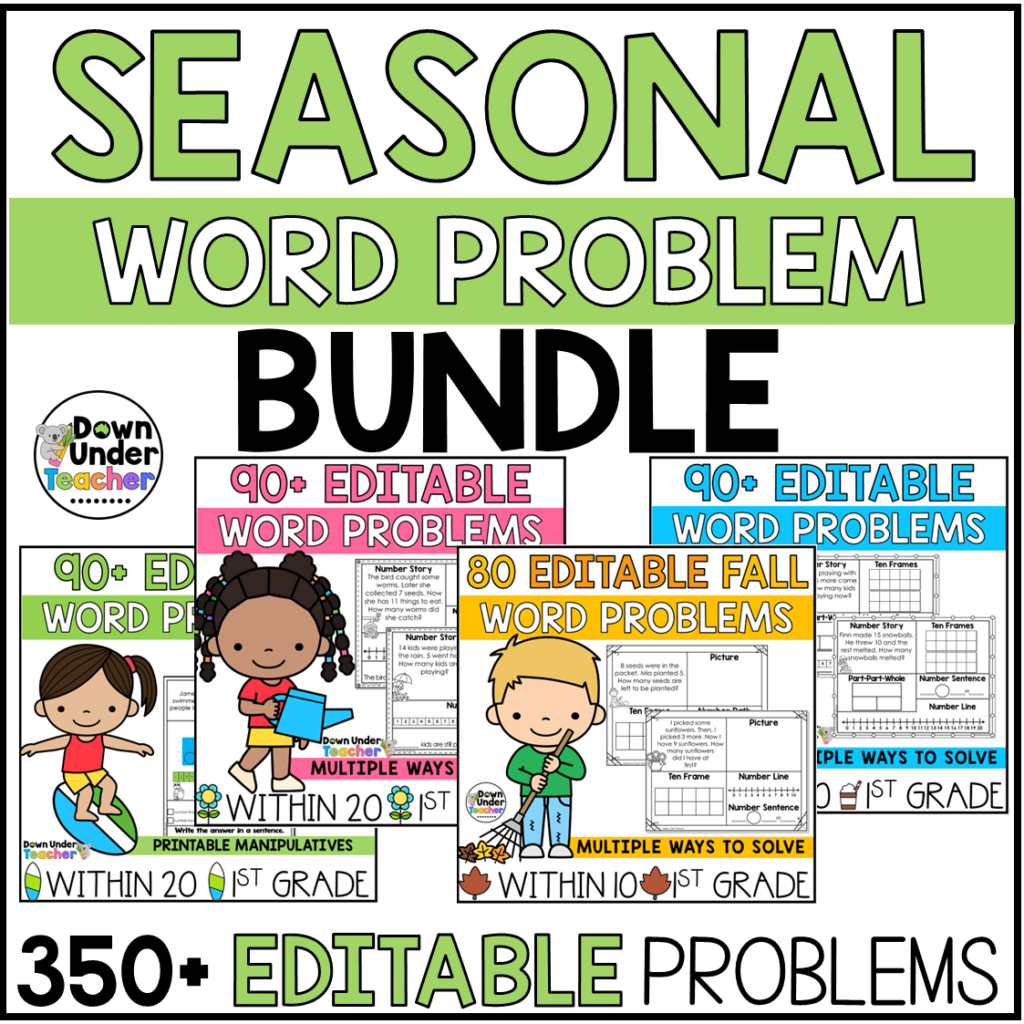
This is where my seasonal Addition and Subtraction Word Problems can be helpful.
You might begin by using them during a small group, before moving them into math centers or indpendent work.


As students begin to see how all these models represent the same mathematical situation, they’ll become less dependent on guessing the operation and more confident explaining how they know.
And that’s the real goal: not just students who can find the answer, but students who can make sense of a problem and show their mathematical thinking.

10 Responses
Venice, with its canals and gondola, is a MUST visit! Also, Colmar in France for its Christmas market!
cheriemae@gmail.com
Hi Kylie! you must visit The Netherlands!! Beautiful country, beautiful people!
I already have your problem solving pack!! Thanks! I love it!! Keep it coming!!
nancyvb1@gmail.com
first
The Netherlands and Italy, they’re lovely, interesting, the ambience is great!!!!!!
foxysexyroxy10@gmail.com
Hi Kylie,
Athens, Greece- absolutely magical! You must go!!
Your word problems are fantastic- I love how you set them up for students to show their thinking!
Cheers,
Karli
creatingathoughtfulclassroom@gmail.com
Visit Michigan in the United States! I very much enjoy your blog and have downloaded several of your freebies! I would love you to choose me for your problem solving pack! It is even my birthday tomorrow, so it would sure be a great birthday gift that keeps on giving! Thanks so much for the great ideas and neat activities!
Thanks for the suggestions Cherie! I’d love a white Christmas instead of the stifling hot day I’m used to here in Australia! France at Christmas sounds magical!
Great suggestion Nancy! I’ve just googled The Netherlands and it looks absolutely stunning!
Thanks Roxanne, I’m adding these two to my list!
Thanks for the suggestion Karli! My brother LOVED Athens so I’ll definitely try and get there!
Hi Jodie, I will defintely try to get to the United States – the only problem is trying to narrow down what I want to see in the time I have!!
By the way, happy birthday and check your email! 😀